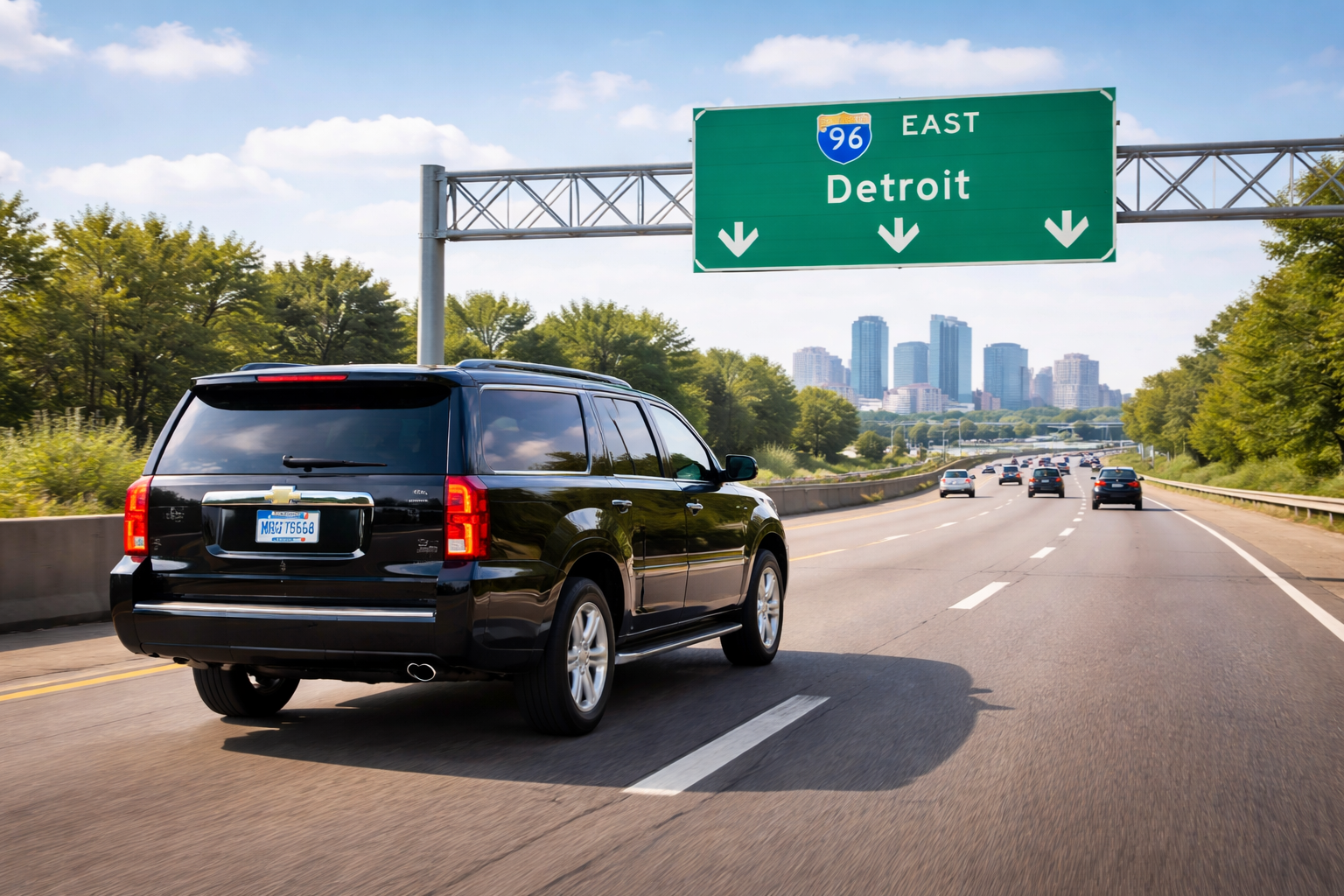
Vehicle selection plays a defining role in long-distance ground travel originating in Grand Rapids. As travel distance increases, the vehicle becomes more than a means of movement—it becomes the primary environment, stability system, and reliability factor for the entire journey. Decisions that have little impact on short trips can significantly affect outcomes over extended distances across Michigan and beyond.
Professional transportation planning treats vehicle selection as a foundational variable rather than a secondary preference.

Distance Changes Vehicle Performance Priorities
Short urban trips prioritize maneuverability and convenience. Long-distance travel shifts priorities toward endurance, stability, and consistency. Vehicles must perform reliably for hours at sustained highway speeds while maintaining predictable handling under changing road and weather conditions.
From Grand Rapids, long-distance routes often involve:
- Extended highway driving
- Variable traffic density
- Seasonal weather exposure
- Limited recovery options once underway
Vehicle suitability directly influences how these factors are managed.
Ride Stability Over Extended Highway Travel
Suspension and Chassis Design
Long-distance travel magnifies the effects of suspension tuning and chassis balance. Vehicles designed for highway stability reduce constant micro-corrections, improving ride smoothness and reducing fatigue for both driver and passengers.
Stable suspension performance becomes especially important on Michigan highways affected by freeze-thaw cycles, uneven pavement, and expansion joints.
Weight Distribution and Road Contact
Vehicle weight and wheelbase influence how consistently tires maintain contact with the road surface. Longer, heavier vehicles tend to offer greater directional stability during sustained highway travel, particularly in crosswinds or during passing maneuvers.
This stability contributes to smoother speed control and predictable handling over distance.
Seating Ergonomics and Travel Endurance
Posture Support and Fatigue Reduction
Long-distance travel places sustained demands on seating ergonomics. Seat design affects posture, circulation, and overall comfort, which directly influence endurance and alertness over time.
Vehicles suited for extended travel provide supportive seating that maintains comfort without frequent repositioning, reducing physical strain during long routes.
Cabin Noise and Vibration Control
Road noise and vibration compound over time. Vehicles designed with sound insulation and vibration dampening create a calmer interior environment, which improves concentration and reduces travel fatigue.
Over long distances, these factors affect both comfort and consistency.
Cargo Capacity and Load Management
Luggage Distribution and Stability
Long-distance travel often involves luggage, equipment, or personal items that must be carried securely. Vehicles with sufficient cargo capacity allow items to be distributed evenly rather than stacked or compressed.
Balanced load distribution improves vehicle handling and braking performance, particularly at highway speeds.
Interior Space and Passenger Movement
Adequate interior space allows passengers to remain comfortable without crowding. Over long distances, restricted space amplifies discomfort and increases fatigue.
Vehicle selection accounts for both passenger count and cargo volume as part of a unified load plan.
Weather Exposure and Vehicle Capability
Traction and Road Condition Adaptability
Michigan weather introduces snow, rain, ice, and wind that alter road conditions unpredictably. Vehicles equipped to maintain traction and stability under changing conditions reduce risk during extended exposure.
Vehicle capability determines how confidently speed, spacing, and route adjustments can be managed when conditions deteriorate.
Visibility and Environmental Control
Extended travel increases exposure to reduced visibility from snow, fog, or heavy rain. Vehicle features that support visibility and consistent climate control help maintain driver focus and passenger comfort throughout the journey.
Mechanical Endurance and Reliability
Sustained Operation Demands
Long-distance travel requires vehicles to operate continuously without overheating, braking fade, or performance degradation. Systems such as cooling, braking, and drivetrain components are stressed differently over long routes than in stop-and-go driving.
Vehicle selection accounts for these endurance demands rather than assuming all vehicles perform equally over distance.
Reduced Tolerance for Mechanical Disruption
Once a long-distance trip is underway, options for resolving mechanical issues are limited. Vehicle reliability becomes critical because even minor failures can cause significant disruption when recovery options are distant or delayed.
Planning assumes reliability rather than contingency repair.
Driver Performance and Vehicle Interaction
Reduced Cognitive Load
Vehicles that track steadily, respond predictably, and absorb road irregularities reduce cognitive load on the driver. Over long distances, reduced cognitive strain improves decision-making and reaction consistency.
This effect compounds over hours of highway travel.
Confidence Under Variable Conditions
Vehicle capability influences how confidently adjustments can be made when traffic, weather, or road conditions change. Confidence does not increase speed; it improves control.
Consistent control supports smoother travel outcomes.
Route Length and Vehicle Suitability Alignment
Not all vehicles are designed for the same travel profiles. Some are optimized for short urban mobility, while others are engineered for sustained highway performance. Long-distance travel from Grand Rapids typically favors vehicles built for:
- Continuous operation
- Stable highway dynamics
- Passenger and cargo endurance
- Environmental resilience
Vehicle selection aligns travel demands with vehicle design intent.
Vehicle Selection as a Planning Decision
In professional ground transportation, vehicle selection is not an aesthetic choice or luxury consideration. It is a planning decision that influences stability, comfort, reliability, and risk exposure across the entire journey.
For long-distance travel from Grand Rapids, selecting a vehicle suited to extended highway operation transforms distance from a liability into a managed variable, supporting consistent and predictable transportation outcomes.