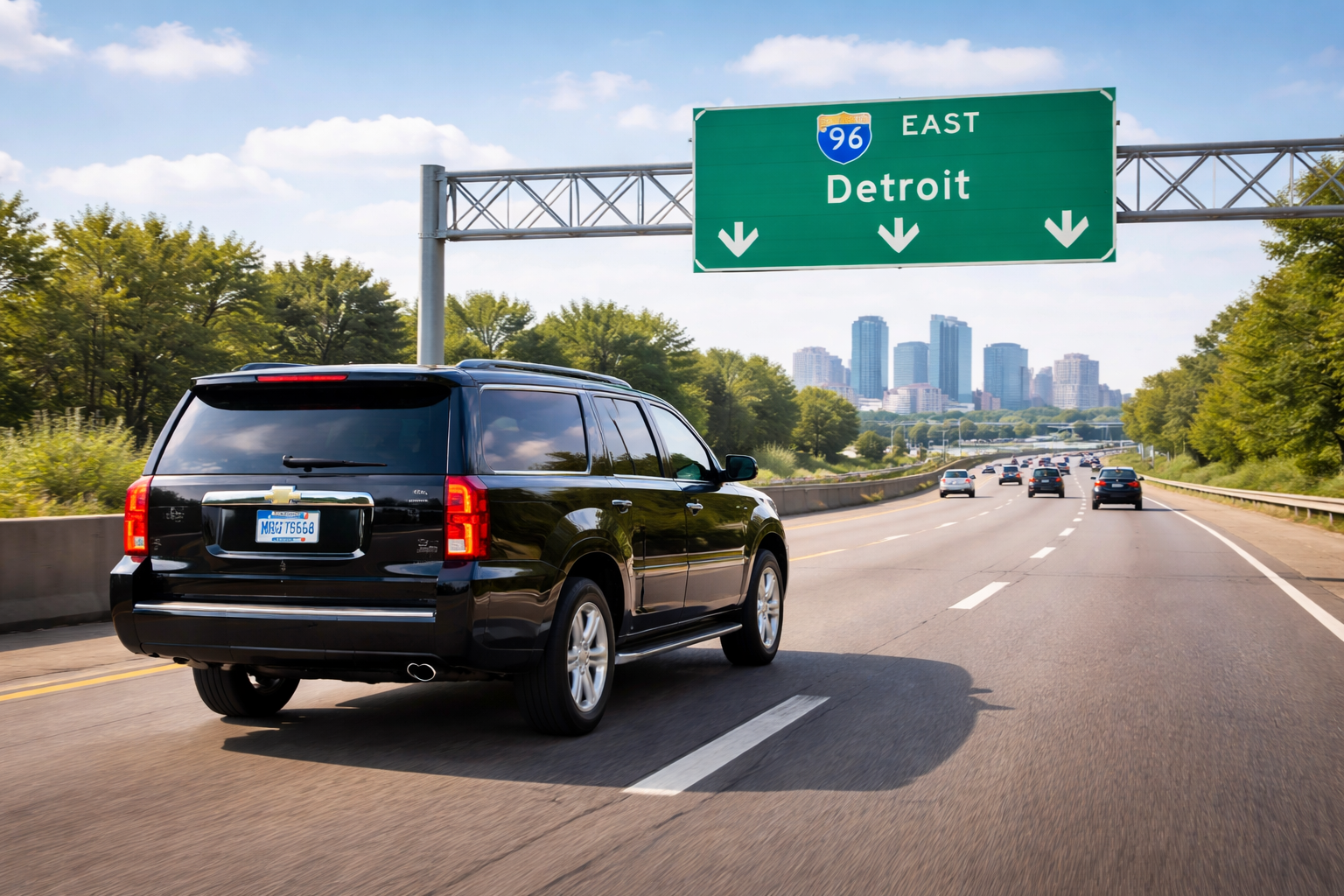
Travel between Grand Rapids and Detroit is one of the most common intercity routes in Michigan. The trip connects West Michigan with a major metropolitan hub that includes Detroit Metropolitan Airport, corporate headquarters, medical institutions, and event venues. Although the distance is manageable by highway, the structure of the journey introduces variables that influence timing accuracy, fatigue, and overall efficiency.
Door to door car service approaches this route as a continuous transportation process rather than a segmented trip involving parking, transfers, or vehicle changes.

Intercity Travel as a Multi Variable Route
The Grand Rapids to Detroit corridor involves extended highway driving, exposure to traffic variability near metropolitan areas, and limited opportunities to recover lost time once delays occur. Travel conditions may shift between low density rural stretches and higher congestion zones closer to Detroit.
Intercity travel requires consistency across the full route rather than isolated decision making at departure.
Elimination of Transition Points
Direct Pickup and Direct Arrival
Door to door car service removes the need for secondary transfers. Pickup begins at the traveler’s exact origin, whether a residence, hotel, or office. Arrival occurs directly at the final destination in Detroit.
This eliminates intermediate steps such as parking garages, rental counters, shuttle connections, or public transit transfers.
Reduced Friction Between Segments
Each additional transition increases exposure to delay and coordination effort. Parking, walking distances, payment processing, and vehicle retrieval extend total travel time beyond driving duration.
A single vehicle journey reduces these friction points to one continuous movement.
Time Modeling Based on Arrival Requirements
Reverse Planning From Fixed Schedules
Many trips to Detroit involve fixed commitments such as flights, meetings, or scheduled events. Door to door car service plans departure based on required arrival time rather than convenience.
Buffer allocation accounts for highway congestion, weather conditions, and metropolitan traffic density.
Consistent Speed Over Reactive Driving
Self managed travel often attempts to compensate for delays by increasing speed. Professional transportation prioritizes consistent pacing and route stability to protect arrival timing.
Consistency improves predictability over long distances.
Fatigue and Travel Endurance
Cognitive Load During Extended Driving
Driving from Grand Rapids to Detroit requires sustained attention for several hours. Monitoring traffic, construction zones, and lane shifts increases cognitive demand.
Fatigue accumulates gradually and may affect performance upon arrival.
Passenger Mode and Energy Preservation
Door to door service shifts responsibility for navigation and road awareness to the driver. Passengers can rest, review materials, or prepare for commitments without dividing attention.
Energy preservation becomes especially important for same day return trips.
Parking and Urban Access in Detroit
Parking Availability and Location Variability
Downtown Detroit and surrounding business districts present varying parking availability depending on time of day and scheduled events. Searching for parking extends travel time and adds unpredictability.
Walking from garages to final destinations introduces additional time exposure.
Direct Building Access
Door to door transportation delivers passengers to designated drop off zones near entrances. Eliminating the parking search reduces logistical complexity in unfamiliar areas.
This streamlines transition into meetings, airports, or event venues.
Weather and Road Condition Exposure
Michigan Seasonal Variability
Michigan weather affects highway travel throughout the year. Snow, ice, rain, and wind alter driving conditions and travel duration.
Professional transportation planning incorporates weather forecasts and adjusts departure timing accordingly.
Long Distance Risk Management
The longer the route, the greater the exposure to changing conditions. Door to door service integrates real time monitoring and route adjustments during transit.
Adaptive oversight reduces the impact of unexpected disruptions.
Cost Structure and Hidden Variables
Total Time Cost Versus Drive Time Alone
Evaluating travel options solely by fuel cost overlooks hidden variables such as parking fees, vehicle wear, fatigue, and schedule risk. These indirect costs accumulate over repeated trips.
Door to door transportation centralizes these variables into a managed structure.
Predictability Over Estimation
Intercity travel often involves underestimating total journey time. Structured transportation planning reduces reliance on assumptions and replaces them with calibrated timing.
Predictability reduces downstream disruption.
Application Across Travel Purposes
Door to door transportation between Grand Rapids and Detroit is commonly used for:
Business meetings and corporate travel
Airport transfers to Detroit Metropolitan Airport
Medical appointments and institutional visits
Special events and conferences
Family or group travel
In each case, direct routing and controlled timing reduce uncertainty across distance.
Continuity as the Primary Advantage
The central difference between door to door car service and other transportation options lies in continuity. Instead of dividing the journey into separate components, the trip functions as one coordinated movement from origin to destination.
For travel between Grand Rapids and Detroit, this continuity absorbs variability, reduces transitions, and maintains schedule integrity across the full length of the route.