

Weather is one of the most influential external variables in ground transportation across West Michigan. Unlike urban regions with dense alternate routes and shorter travel distances, West Michigan transportation relies heavily on highway corridors, regional connectors, and timing-sensitive travel. Weather conditions do not merely slow travel; they reshape routing decisions, timing models, vehicle readiness, and operational oversight.
Professional ground transportation accounts for weather as a structural factor rather than an occasional disruption.
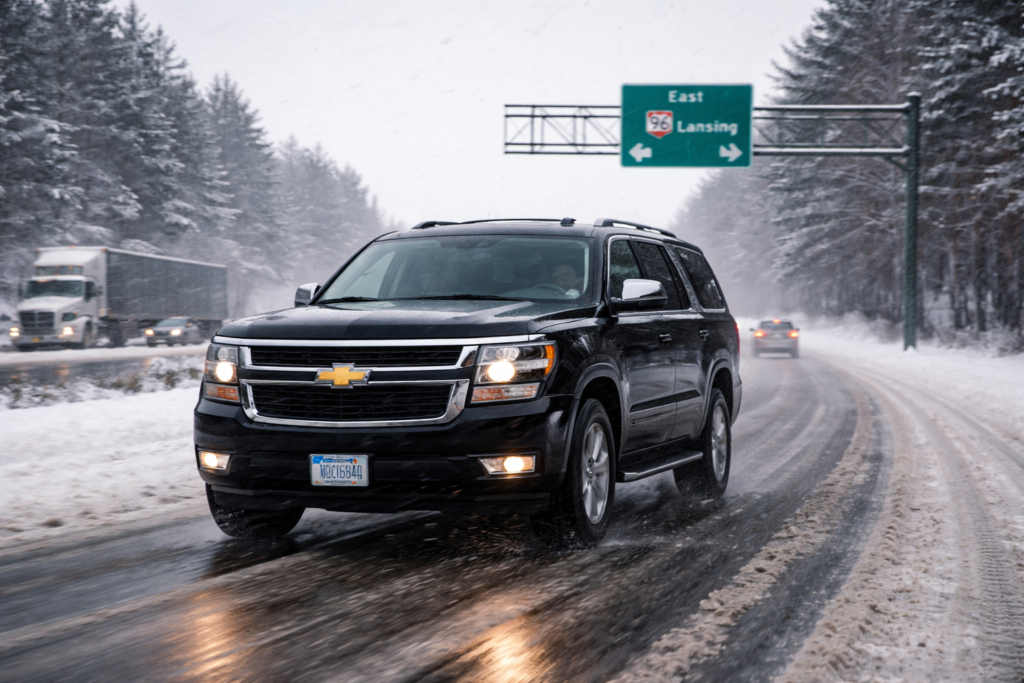
Weather as an Operational Variable Rather Than an Obstacle
In transportation planning, weather is not treated as an exception. It is a recurring operational condition that influences every stage of travel, from departure timing to route selection and speed modeling. West Michigan’s proximity to Lake Michigan introduces microclimates that can change conditions rapidly within short distances.
Professional transportation systems integrate weather into planning assumptions instead of reacting once conditions deteriorate.
Seasonal Weather Patterns in West Michigan
Winter Conditions and Surface Reliability
Winter introduces snow accumulation, ice formation, reduced traction, and fluctuating road surface conditions. Even when roads are cleared, residual ice and packed snow alter safe operating speeds.
Professional transportation planning adjusts:
- Average speed expectations
- Following distances
- Buffer time allocations
- Route preferences based on plowing priority
Travel duration modeling during winter assumes degraded conditions rather than optimal pavement performance.
Lake-Effect Snow Variability
Lake-effect snow creates uneven conditions across the region. One corridor may remain clear while another experiences sudden visibility loss and accumulation. This unpredictability increases exposure risk over long distances.
Professional routing avoids rigid assumptions and favors corridors with higher maintenance frequency and better real-time condition reporting.
Rain, Fog, and Visibility Constraints
Reduced Visibility and Driver Response Windows
Rain and fog reduce contrast, depth perception, and reaction time. These conditions disproportionately affect highway travel, where higher speeds compress decision windows.
Professional transportation operations lower speed thresholds and increase buffer allowances during reduced-visibility conditions rather than attempting to maintain dry-road timing.
Hydroplaning and Surface Drainage Risks
Heavy rain increases hydroplaning risk, especially on highways with worn surfaces or standing water zones. Certain West Michigan corridors are more susceptible due to grading and drainage patterns.
Planning incorporates known drainage weak points and adjusts lane usage and speed modeling accordingly.
Wind Exposure and Vehicle Stability
Crosswinds on Open Highway Segments
West Michigan’s open stretches, particularly near agricultural zones and lakeshore corridors, are susceptible to strong crosswinds. Wind affects vehicle stability, especially during passing maneuvers and on elevated road segments.
Professional transportation planning accounts for wind advisories when selecting vehicle types and routes, prioritizing stability over speed.
Impact on Long-Distance Travel Endurance
Sustained wind increases driver workload and fatigue over long distances. Operational planning considers these effects when evaluating travel duration and rest thresholds.
Temperature Extremes and Mechanical Considerations
Cold Temperature Effects
Extreme cold affects tire pressure, battery performance, braking response, and fluid viscosity. These factors influence both vehicle reliability and stopping distances.
Professional ground transportation assumes temperature-induced performance changes and plans maintenance and readiness accordingly.
Freeze-Thaw Cycles and Road Degradation
Repeated freeze-thaw cycles create potholes and uneven surfaces. These conditions increase mechanical stress and reduce consistent travel speeds.
Route planning adapts to known degradation zones to reduce unpredictability.
Timing Adjustments Driven by Weather Exposure
Departure Time Calibration
Weather conditions influence not just route choice but optimal departure windows. Leaving earlier during adverse conditions increases buffer absorption capacity and reduces compounding delays.
Professional planning prioritizes arrival certainty over departure convenience during weather-affected travel.
Compounding Delay Risk Over Distance
The longer the route, the greater the exposure to changing weather conditions. Planning assumes weather may worsen mid-route and allocates time margins accordingly.
Continuous Monitoring and Adaptive Control
Real-Time Weather Integration
Professional transportation does not rely solely on pre-departure forecasts. Conditions are monitored throughout travel, including radar updates, road condition feeds, and incident alerts.
This allows for mid-route adjustments before conditions escalate into disruptions.
Decision Thresholds Under Adverse Conditions
Operational systems define thresholds that trigger route changes, speed adjustments, or timing recalibration. Decisions are made systematically rather than instinctively, reducing risk under stress.
Passenger Experience and Weather Management
Ride Stability and Comfort
Weather-induced adjustments contribute to smoother, more controlled travel. Reduced speed variance and consistent routing improve ride stability during adverse conditions.
Professional ground transportation emphasizes predictability and control rather than aggressive time recovery.
Stress Reduction Through Predictability
Weather-related uncertainty is a major contributor to travel stress. Structured planning reduces uncertainty by accounting for conditions before they escalate into disruptions.
Weather as a Core Planning Input in West Michigan
In West Michigan, weather is not a secondary consideration—it is a core planning input that shapes transportation outcomes. Snow, rain, fog, wind, and temperature extremes each influence how ground transportation systems function across distance and time.
Professional ground transportation absorbs these variables through planning, adaptability, and controlled execution, ensuring that weather alters strategy rather than undermining reliability.